


Cart
0

No products found
Use fewer filters or clear all
Now available at Gunreben.de in the usual top quality:
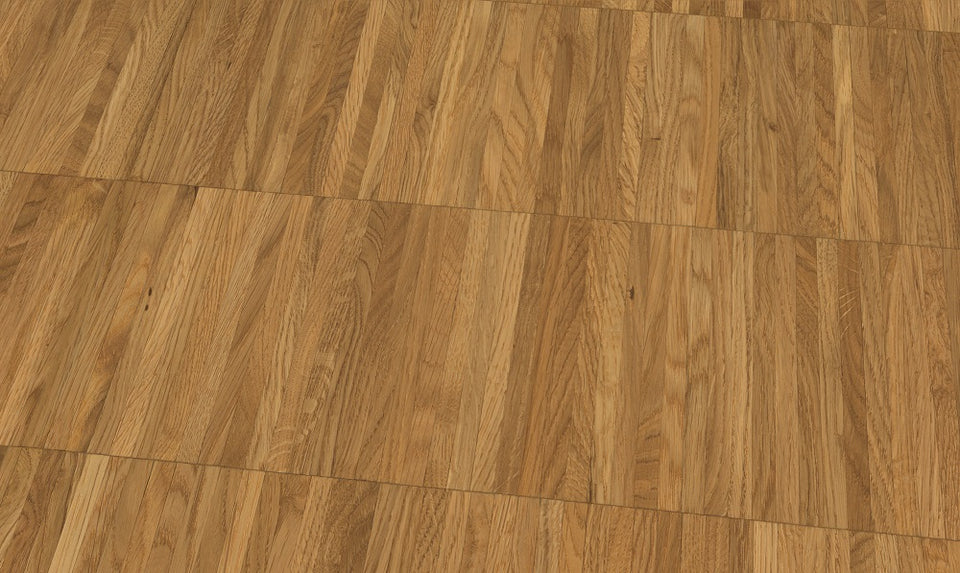
Industrial Parquet (Lamparquet) made of solid wood
Industrial Parquet is a particularly robust solid wood floor made of wooden slats arranged on edge. The characterful parquet pattern combines high durability with a natural wood look and can be selected to suit the project based on wood species, grading, and thickness.
The floor is particularly suitable when a resilient and renewable parquet solution is required. After full-surface bonding, the raw surface is sanded and oiled or sealed to suit its usage.
Overview: All solid wood parquet For installation, finishing, and maintenance:
Adhesives | Skirting boards | Wood floor oil | Parquet sealant | Care products
Advantages of Industrial Parquet
-
High durability
You get a dense, resilient parquet surface – ideal for floors that have to withstand a lot in everyday life. -
Genuine solid wood
Industrial Parquet is made of wood throughout and offers reserves for future renovations, sanding, and new surface treatments. -
Appropriate selection
Wood species, grading, and thickness influence the look, installation height, durability, and effect on the room. -
Individual surface
The raw surface leaves room for the appropriate finishing treatment – oiled or sealed, depending on usage, maintenance preferences, and desired appearance. -
Quiet parquet pattern
The parallel slat structure appears clear, artisanal, and high-quality. Depending on the wood species, a subtle to vibrant natural grain is created.
Wood species, grading, and area of application
Whether quiet, vibrant, or particularly striking – with Industrial Parquet, it is primarily the wood species and grading that determine the effect of the floor. The vertically arranged slats showcase the natural wood grain in a compact way and create a characterful, artisanal parquet pattern.
Selecting Industrial Parquet by wood species
The wood species shapes the color, brightness, and expression of the floor. Oak appears classic and versatile, smoked oak significantly darker and more striking. Beech, ash, maple, red oak, walnut, or cherry provide lighter, warmer, or more vibrant accents depending on the selection.
Bright & friendly Dark & striking


Selecting Industrial Parquet by grading
The grading determines how quiet or vibrant the surface appears. More uniform gradings are suitable for clear, restrained interior design concepts. More vibrant gradings show more color play, structure, and natural features.
Quiet & balanced Vibrant & striking


Thickness & installation height
Industrial Parquet is available in thicknesses of 10 mm, 16 mm, and 22 mm. The appropriate thickness should not only be selected according to installation height but above all according to usage, substrate, connection areas, and desired durability. Thicker variants have more substance and are a good fit when an especially robust solid wood floor is desired.
Installation and surface treatment
Industrial Parquet is bonded over the entire surface, thereby forming a firm, resilient connection with the substrate. This is particularly important when the floor needs to lie stable and withstand high stress. Crucial factors are an even, load-bearing, and sufficiently dry substrate, as well as an adhesive that matches the wood species, thickness, and installation conditions.
The raw surface is sanded after installation and then treated. With wood floor oil, the natural wood structure remains more tangible and the floor gains a warm, open-pored effect. A parquet sealant forms a closed protective layer and is particularly suitable when surface protection is the priority.
Tip: If installation over hot water underfloor heating is planned, strip parquet or mosaic parquet could be suitable alternatives. It is decisive that the chosen floor fits the planned construction.
Technical planning notes
Industrial Parquet requires an even, load-bearing, clean, and sufficiently dry substrate. Check residual moisture, evenness, and stability before installation to ensure the full-surface bonding holds securely.
Store the parquet in a protected and climatically suitable environment in the room before installation. This allows the wood to adapt to local conditions. Constant room temperatures and suitable humidity are important – both during installation and during later use.
